
꽃의 일지 — Reprise 2 - <꽃꽂이 수업 - 철학적 사고> 다시보기
Chapter 2. 이오난사 인간상
우리는 식물을 있는 그대로 보는가, 아니면 인간의 필요와 성향을 투영해서 바라보는가
1. 꽃시장의 기억
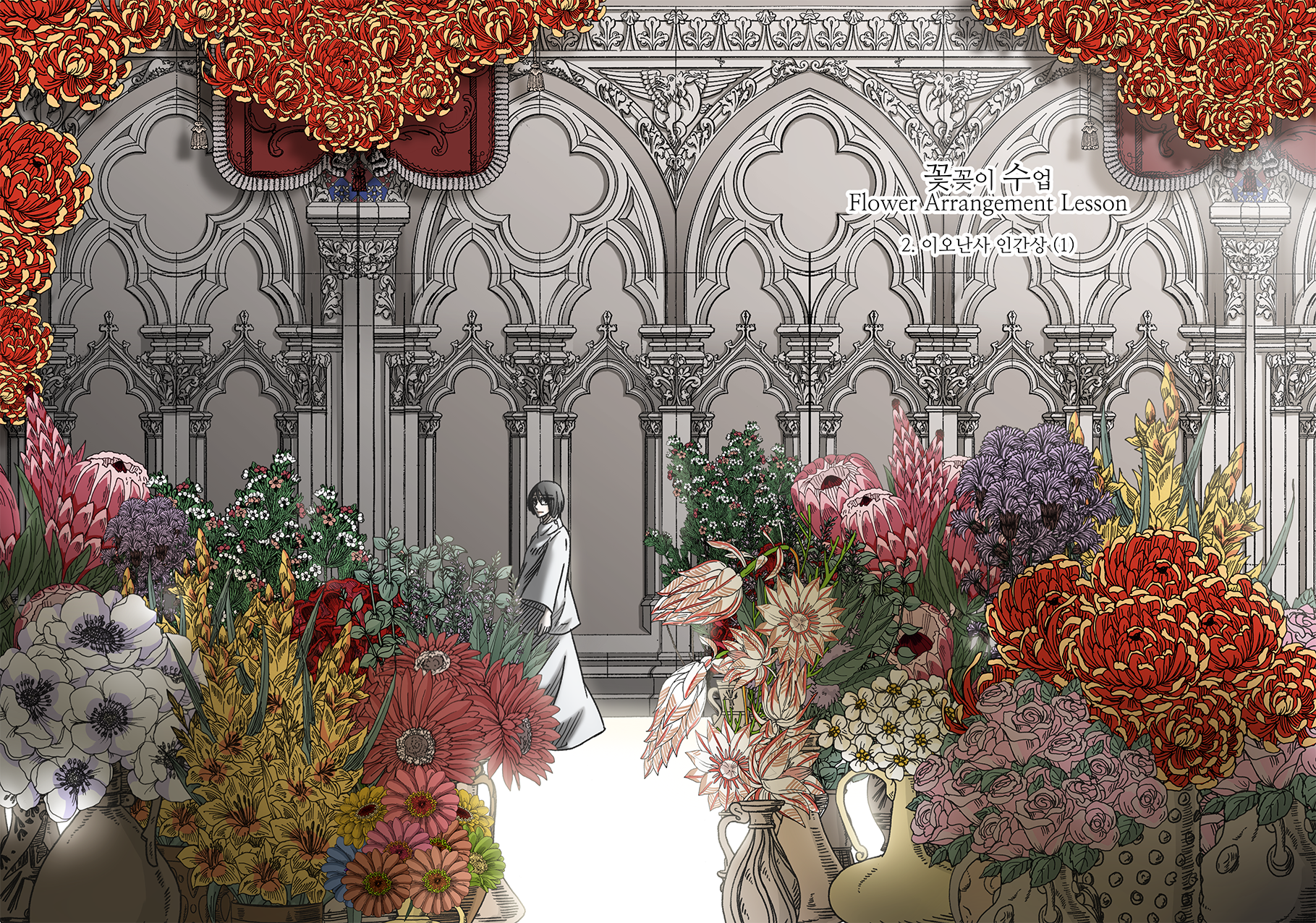
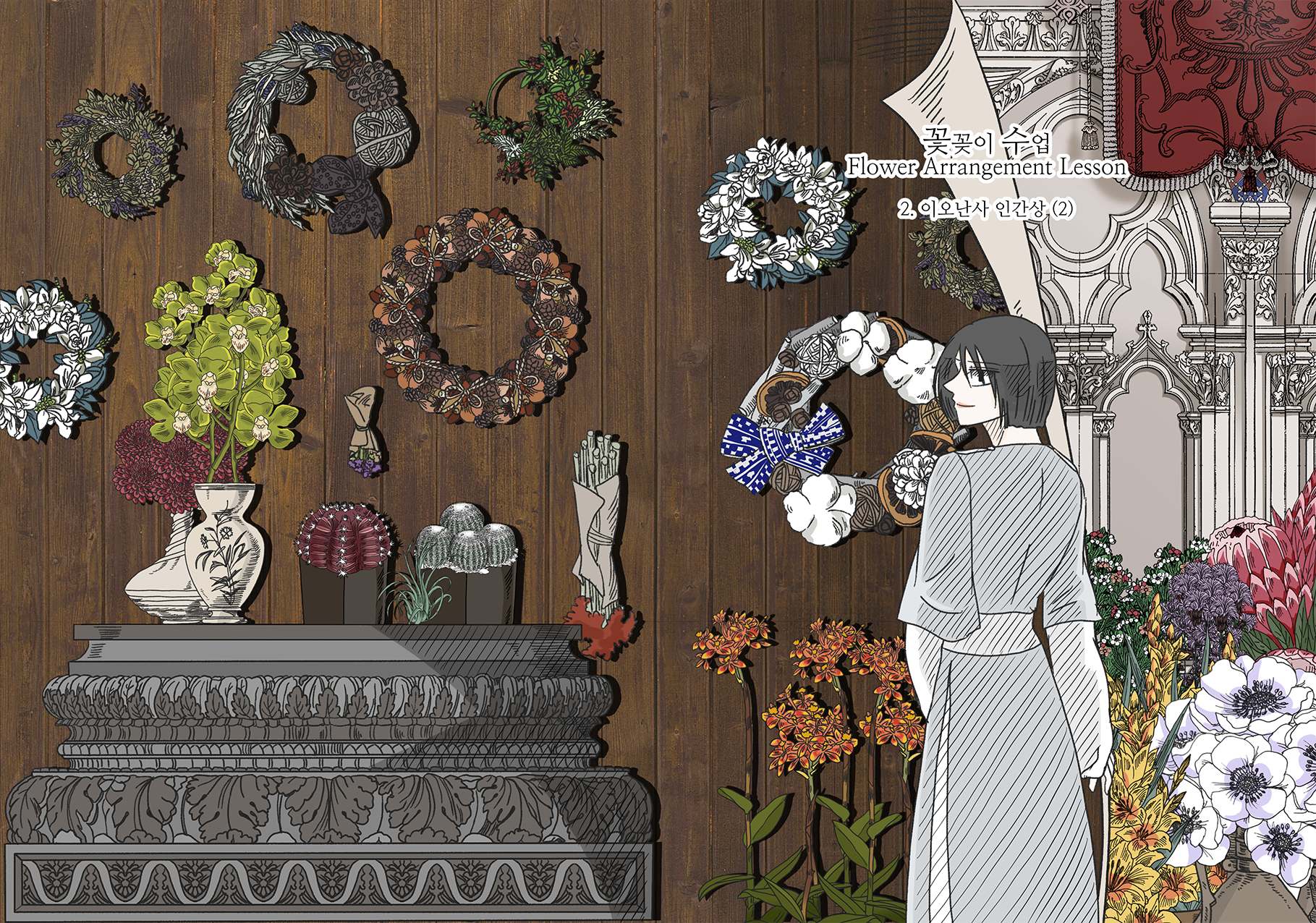
<이오난사 인간상>은 실제 꽃시장을 돌아다니고, 한 사람이 식물을 골라 그 이유를 이야기하게 했던 장면부터 시작합니다. 미이는 자목단, 소정 선인장, 그리고 가장 작은 틸란드시아인 이오난사를 골랐죠. 여기서 처음에는 단순히 “의지할 수 있고(자목단), 나를 감싸줄 것 같은 식물(소정)”을 고르는 이야기로 출발합니다.
2. 이상한 판매 현상
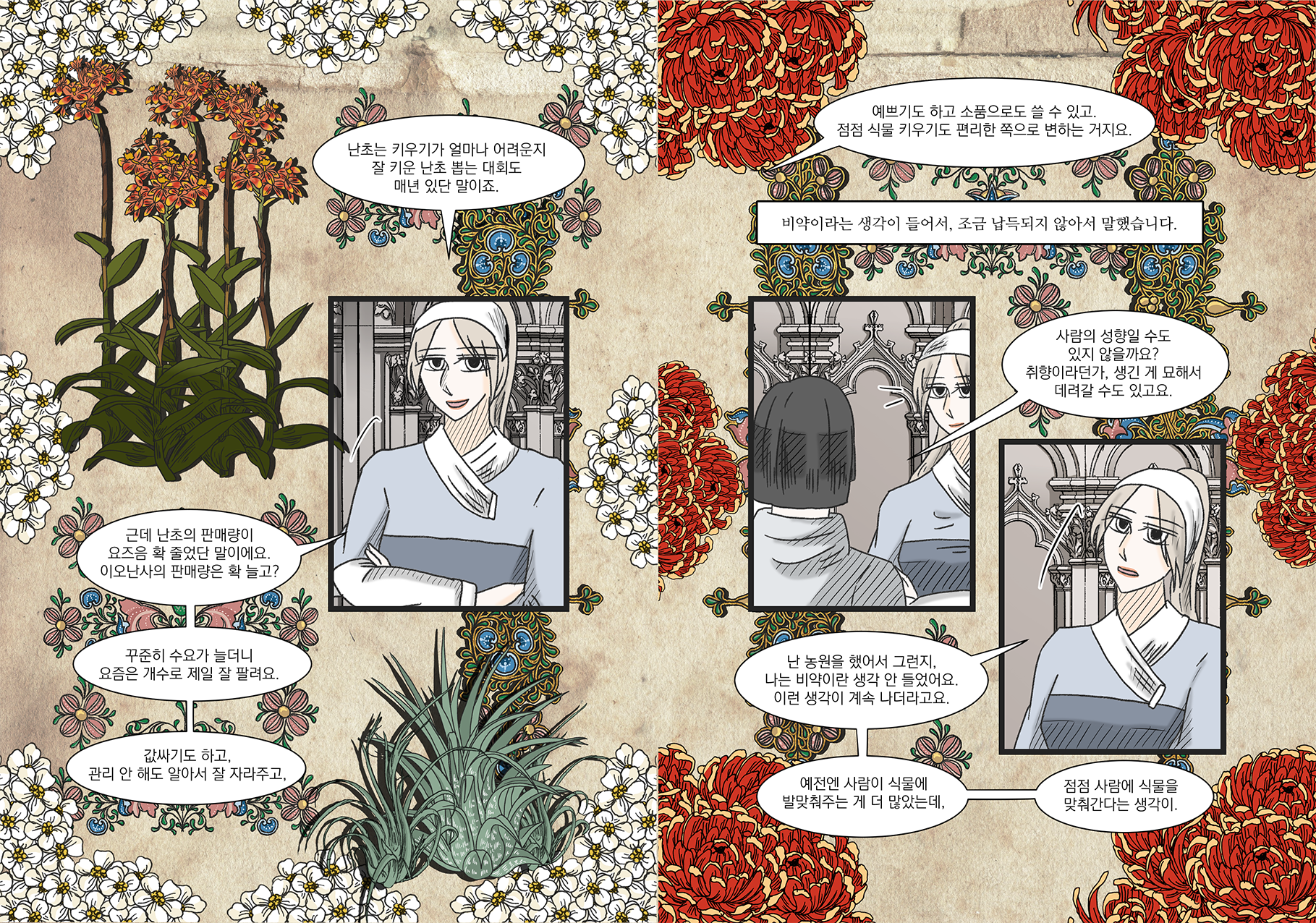
그런데 꽃시장 주인이 말합니다. 난초 판매량은 줄고, 관리하기 쉽고 값도 비교적 부담이 적으며 물을 자주 줄 필요가 없는 이오난사는 잘 팔린다. 불완전한 논리 연결이지만, 이 말이 <이오난사 인간상>의 전환점입니다. 중요한 건 “이오난사가 좋은 식물이다”가 아니라, 왜 우리는 점점 ‘관리하기 쉬운 식물’을 원하게 되었을까? 라는 질문입니다.
3. 인간이 식물을 자기 삶에 맞춘다
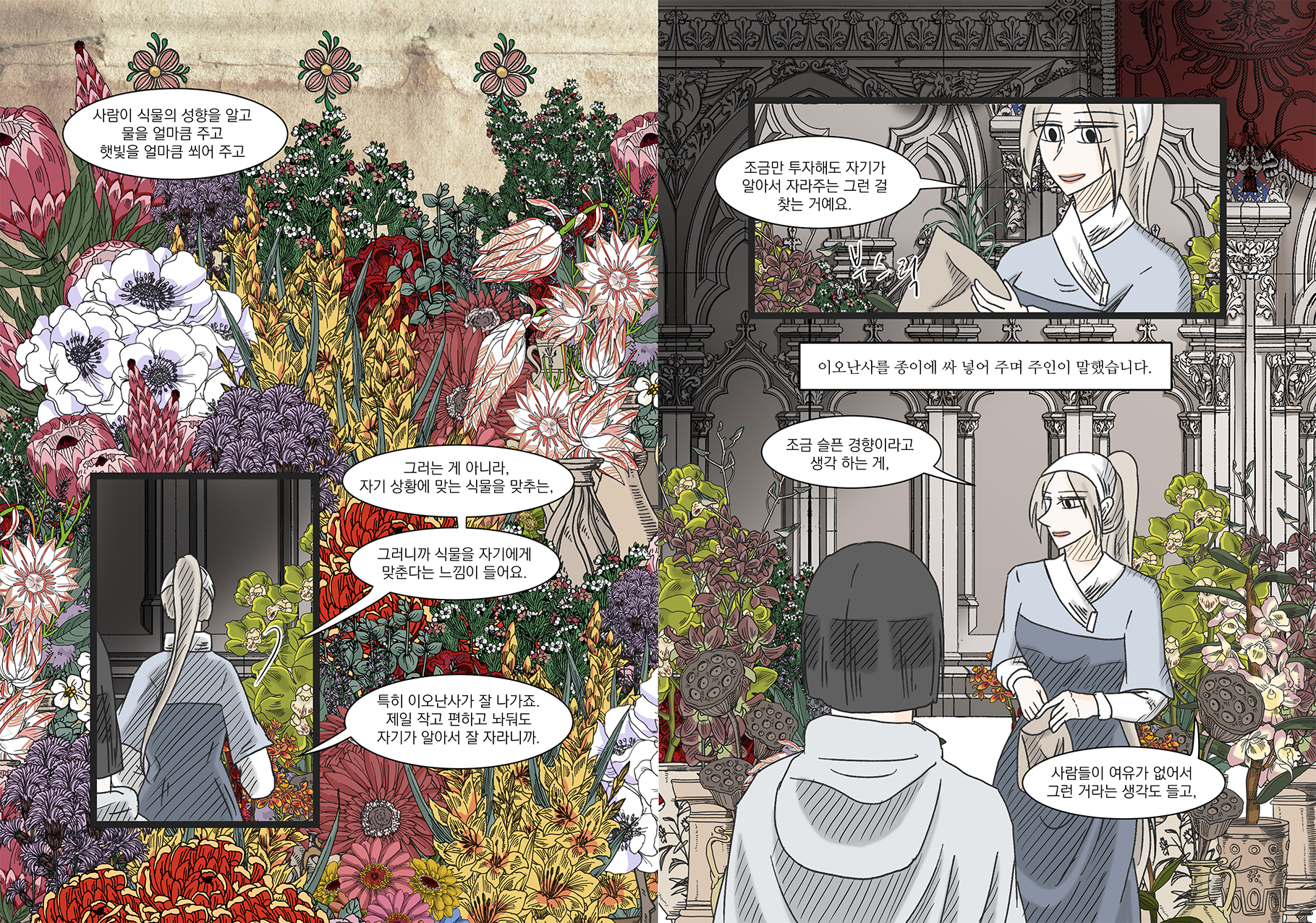
사람의 성향에 맞는 식물을 선택한다 / 조금만 투자해도 알아서 자라는 것을 찾는다 / 여유가 없어서 그런 것일 수도 있다 / 예전에는 사람이 식물에게 맞추었다면, 이제는 식물을 사람에게 맞추려 한다.
대사에 녹여내려 했듯이, 이는 우리가 선택한다고 생각하지만, 선택의 방식 역시 우리가 살아가는 시대의 시간표와 생활조건에서 만들어지는 것은 아닐까 하는 질문을 담고 있습니다.
4. 이오난사 인간상
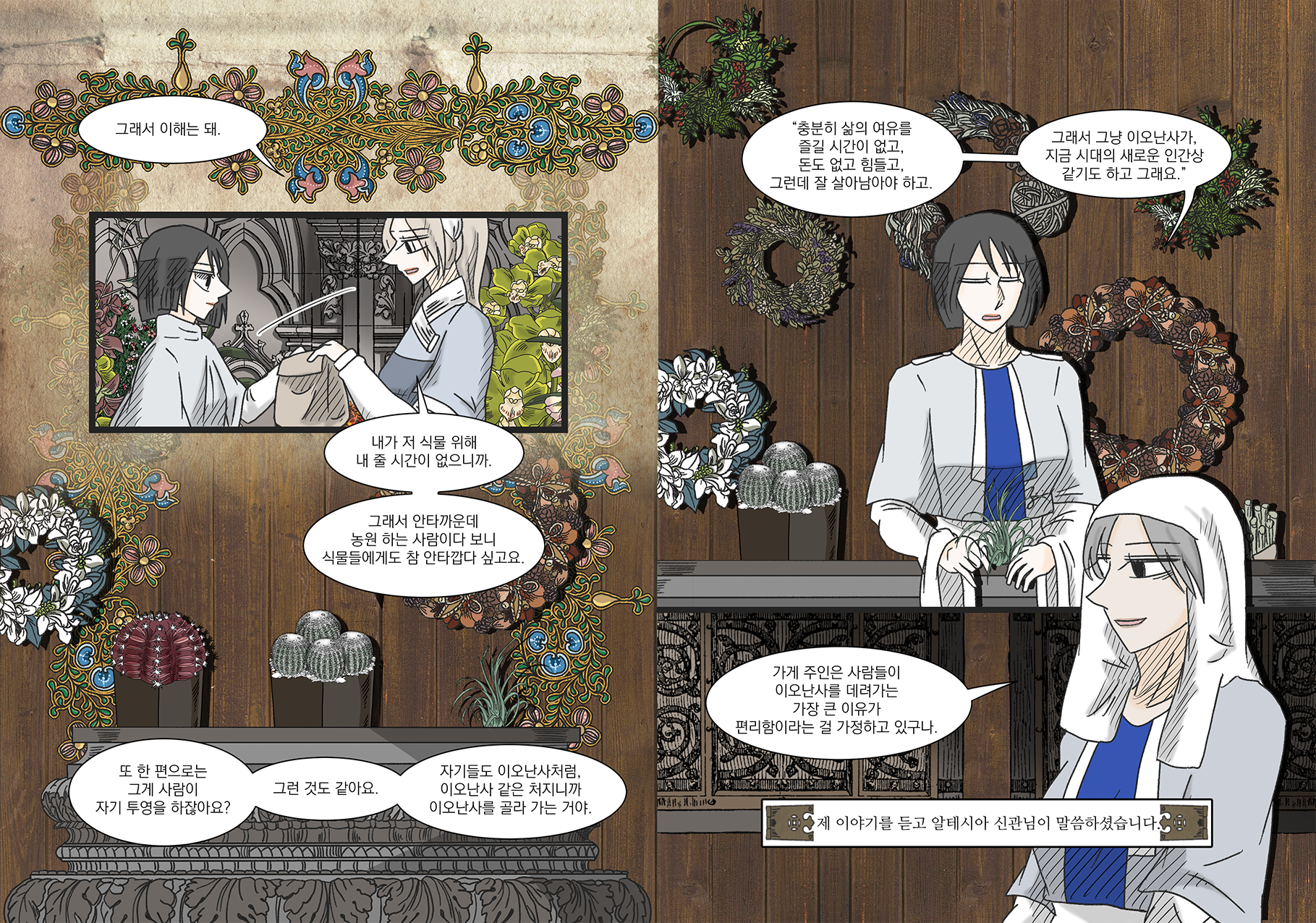
사람도 점점 묵묵히 견디고 / 관심을 많이 요구하지 않으며 / 신경 쓰이지 않고 / 알아서 잘 자라고 / 요구하지 않는 존재가 되기를 요구받는 것은 아닐까 묻습니다. 그래서 “이오난사가 인간을 닮은 것이 아니라, 인간이 이오난사를 닮아가는 것은 아닐까”라는 사고가 나오는 거죠.
2026년의 지금 다시 읽어보니, 당시의 저는 '편리함'이라는 것을 조금 경계하고, 부정적으로 보고 있던 것 같습니다. 그러나 편리한 식물을 좋아하는 것이 잘못이라는 뜻은 아니었어요. 왜 그런 식물을 원하는지, 그 선택 속에 우리의 생활이 어떻게 비치는지를 궁금해했던 것 같아요.
5. 현재의 작업 - 보태니컬 아카이브 Botanical Archive
2018년에는 식물을 인간의 삶을 비춰보는 거울처럼 바라봤다면, 현재의 BA에서는 한 단계 더 나아가 식물을 인간의 비유만으로 환원하지 않고, 식물 자체의 구조·생활사·생존 방식도 보려 하고 있는데요. 식물을 대상으로만 바라보지 않고 (앞편에 나왔던 것처럼) 조금 더 심층적으로 보고자 정리, 아카이빙을 하고 있는 프로젝트가 보태니컬 아카이브입니다. 블로그에는 연재하지 않고 있지만, 공식 홈페이지에 연재하고 있지요.
지금은 식물을 인간의 삶에 빗대어 읽는 것만큼이나, 인간의 해석 바깥에서 식물이 어떻게 살아가는지를 보는 일에도 관심이 있습니다. 한 번 생각해보세요. 우리는 식물을 고르는 걸까요, 아니면 우리가 살아가는 방식이, 우리가 고르는 식물을 결정하고 있는 걸까요?
8년 후에 다시 보고, 그동안 반려식물쪽에 있었던 사회적 변화들을 떠올리니 저에게 재밌어지는 지점입니다.
* * *
원작에 대하여
이 글은 2018년 제작한 만화책 <꽃꽂이 수업 — 철학적 사고>의 1화와 2화, <맨드라미의 죽음>을 2026년의 시선으로 다시 읽은 기록입니다.
원작에서는 미이, 알비나, 알테시아의 대화와 사건을 통해 이 질문이 보다 긴 이야기로 이어집니다.
https://product.kyobobook.co.kr/detail/S000001914716
The Tillandsia Human Type
Recently, I have been revisiting Flower Arrangement Lesson — Philosophical Thinking, a book I published in 2018.
At the time, I was studying both philosophy and life sciences, and I was also teaching a small four-week class about plants. The book grew out of questions that repeatedly surfaced during those lessons: how do we look at plants, how do we choose them, and what kind of relationship do we imagine ourselves to have with them?
One chapter was titled The Tillandsia Human Type.
The story begins at a flower market.
The protagonist first looks at bonsai and small cacti—plants that seem sturdy, compact, and reassuring. Eventually, however, she encounters a very small Tillandsia ionantha.
Tillandsias were becoming increasingly popular at the time. They did not require a pot of soil, needed relatively little watering, and could be placed almost anywhere. They were inexpensive, decorative, and easy to care for.
The shopkeeper explains that this is precisely why they sell so well.
People have less time.
They want plants that can survive with little attention—plants that remain attractive, take up little space, and continue to live without demanding too much care.
Listening to this explanation, I began to feel slightly uneasy.
Were people simply choosing plants that suited their lifestyles?
Or were we gradually expecting plants to adapt themselves to the conditions of our lives?
We often say that we love plants. We learn how much water they need, how much light they prefer, and what kind of environment allows them to grow well.
But there is another way of thinking about this relationship.
Rather than adjusting ourselves to the needs of a plant, perhaps we increasingly search for plants that fit neatly into our existing routines.
Plants that are easy to manage.
Plants that do not require much time.
Plants that are resilient enough to recover from our neglect.
Plants that are beautiful, useful, and convenient at the same time.
Looking at the small ionantha, I began to wonder whether this preference might also reflect something about the kind of human being contemporary life asks us to become.
Someone who does not require too much care.
Someone who remains productive without asking for much.
Someone adaptable, undemanding, and capable of surviving even when there is little time or attention to spare.
In the book, I called this imagined figure “the Tillandsia human type.”
Of course, this is not a conclusion.
It is an analogy—a thought that emerged from watching the way people selected plants.
Perhaps the popularity of easy-care plants does not simply tell us something about plants. It may also reveal something about the lives of the people who choose them.
And perhaps we project ourselves onto plants more often than we realise.
We describe one plant as strong, another as delicate. We call some easy, others difficult. We value those that bloom beautifully, grow quickly, require little care, or fit conveniently into our spaces.
In doing so, we may not only be describing plants.
We may also be revealing our own expectations.
When I reread this chapter in 2026, what interests me most is not whether the metaphor was entirely correct.
What remains with me is the question behind it.
Do we choose plants according to who they are, or according to the kind of lives we already lead?
And when convenience, resilience, adaptability, and self-sufficiency become qualities we repeatedly admire, are these values being applied only to plants?
Or are we also, little by little, asking the same things of one another?
Perhaps we are all choosing ionanthas.
And perhaps, without quite noticing it, we are also turning one another into them.
Looking back now, I can see that these questions were already closely connected to what would later become the Botanical Archive.
Observation was never only about identifying a plant.
It was also a way of asking what we see in it, what we expect from it, and what our relationship with it reveals about ourselves.
Observation → Understanding → Reinterpretation → Archive
I did not use these words in 2018.
But I think I was already beginning to work in this way.
Records of Flora
saleign
